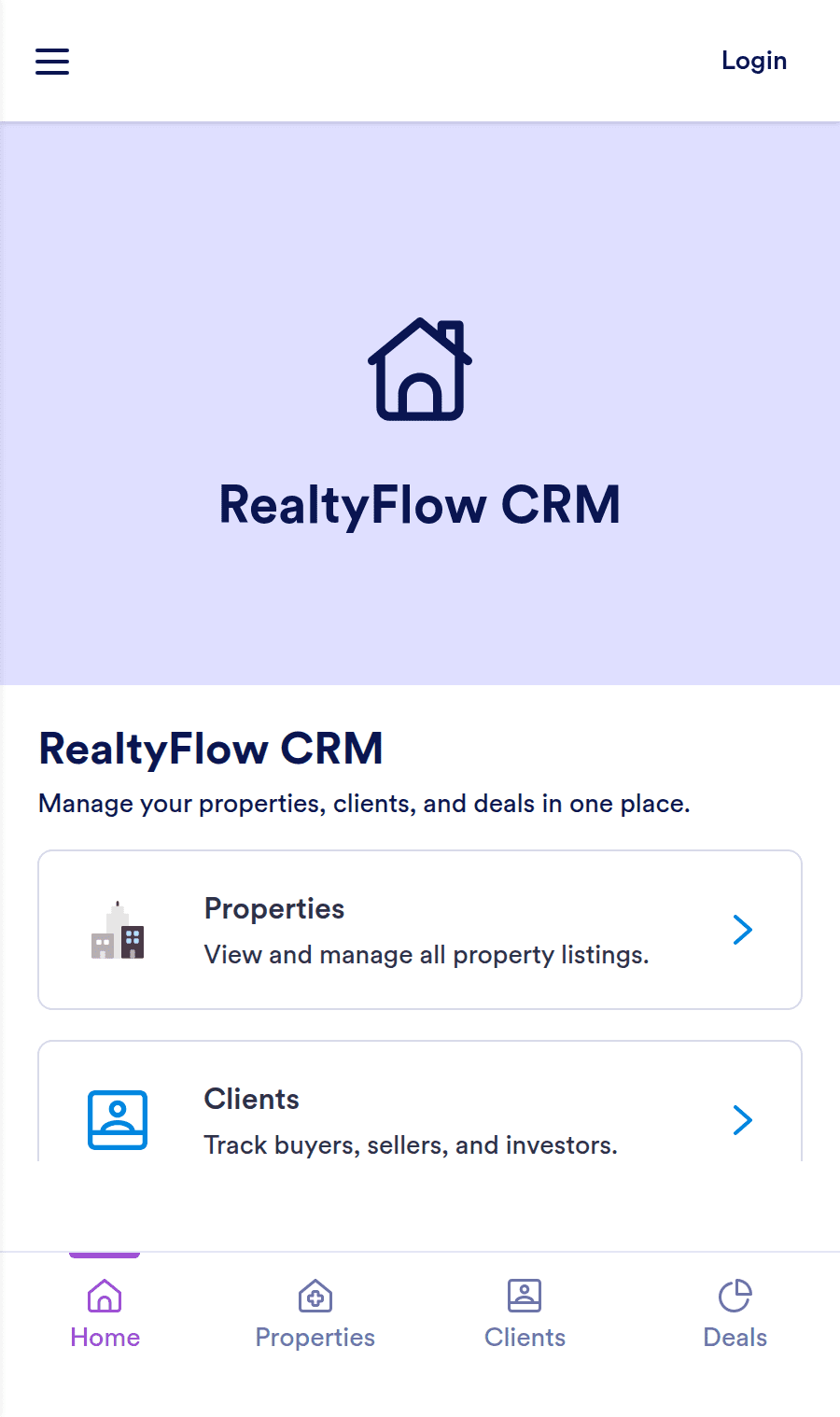
In the fiercely competitive world of real estate, staying ahead means constantly seeking efficiencies, optimizing client interactions, and leveraging technology to your advantage. Manual lead tracking, fragmented communication, and disjoined data can quickly lead to missed opportunities and a lagging business. This is precisely where a specialized real estate CRM platform emerges as an indispensable tool, transforming how agents and brokers manage their operations and client relationships.
Far beyond a simple contact manager, a real estate CRM is a sophisticated ecosystem designed to centralize every aspect of your business, from initial lead capture to post-closing follow-up. It's the strategic advantage that empowers professionals to streamline workflows, enhance client engagement, and ultimately, close more deals faster.
Why a Specialized Real Estate CRM is Non-Negotiable Today
While general-purpose Customer Relationship Management (CRM) systems exist, a real estate CRM platform is specifically engineered to meet the unique demands of the property market. Its design accounts for the complex client journeys, property data requirements, and marketing nuances inherent in real estate. These specialized systems stand out due to several critical differentiators:
- Deep MLS and IDX Integration: Unlike generic CRMs, real estate platforms often boast deep integration with Multiple Listing Services (MLS) boards. This typically occurs through Internet Data Exchange (IDX) websites, allowing for the seamless display and search of property listings directly on an agent's site. This direct access provides real-time, accurate property information and invaluable market insights, forming the bedrock of informed decision-making and client advice.
- Robust, Built-in Marketing Tools: From automated email and text campaigns to sophisticated drip sequences and social media integration, these platforms are equipped with powerful marketing functionalities. They enable agents to engage leads and clients with relevant, timely communication, nurture relationships over time, and execute targeted lead generation strategies.
- Tailored Lead Management: Real estate CRMs provide the infrastructure to capture leads from diverse sources – be it website inquiries, social media ads, open houses, or third-party portals. Once captured, leads are automatically tracked, segmented, and fed into personalized nurturing sequences, ensuring no prospect falls through the cracks.
- Centralized Data and Workflow Streamlining: Imagine having a single source of truth for all client data, property information, communications, and task assignments. This centralization eliminates data silos, reduces administrative burden, and allows agents to manage contacts, track pipelines, and automate daily tasks with unprecedented efficiency. It means less time on tedious paperwork and more time building relationships and closing deals.
In essence, a specialized real estate CRM acts as the digital backbone of an efficient, client-centric real estate business. It's about maintaining a comprehensive overview of every client and lead, from their initial interest to long after a transaction is complete, thereby improving productivity and accelerating the sales cycle.
Key Features That Define a Top-Tier Real Estate CRM Platform
To truly streamline operations and maximize client engagement, a real estate CRM platform must offer a suite of powerful, integrated features. Understanding these core capabilities is crucial when evaluating which system is right for your business:
MLS & IDX Integration for Unrivaled Data Access
Perhaps the most significant differentiator, direct access to MLS data via IDX websites ensures agents and clients have the most up-to-date and accurate property information at their fingertips. This isn't just about displaying listings; it's about leveraging market data for comparative market analyses, identifying trends, and providing data-driven advice. Modern platforms often enhance this with AI, offering predictive analytics and personalized property recommendations. To delve deeper into how these features revolutionize real estate, explore MLS & AI: Essential Features of Top Real Estate CRM Platforms.
Advanced Marketing and Lead Generation Capabilities
- Automated Drip Campaigns: Set up intelligent email and text sequences that trigger based on lead behavior, ensuring timely and relevant follow-ups without manual intervention.
- Social Media Integration: Manage your social presence, generate leads directly from platforms like Facebook and Instagram, and track engagement all within your CRM.
- Customizable Landing Pages & Forms: Create high-converting web assets to capture specific lead information and funnel it directly into your system.
- AI-Powered Content Creation: Some cutting-edge CRMs now assist with drafting email copy, text messages, or even entire marketing plans, saving agents valuable time and ensuring consistent messaging.
Comprehensive Contact and Pipeline Management
A robust CRM allows you to organize contacts with rich profiles, segment them based on criteria like lead source or buying intent, and visualize your entire sales pipeline. Tracking mandates, deals, and communication history becomes effortless, ensuring you never miss a follow-up or a crucial detail about a client's preferences.
Intelligent Automation and Task Management
Beyond marketing, automation extends to daily tasks. Schedule appointments, set reminders for follow-ups, and automate routine communications. This frees up agents to focus on high-value activities, knowing that repetitive tasks are handled efficiently by the system.
Analytics and Reporting for Strategic Growth
Effective CRMs provide dashboards and reports that offer insights into lead conversion rates, marketing campaign performance, agent productivity, and more. This data is invaluable for identifying what's working, where improvements are needed, and how to allocate resources for optimal ROI.
Mobile Accessibility for Business On-the-Go
In a dynamic industry like real estate, the ability to manage your business from anywhere is paramount. Top-tier platforms offer robust mobile apps, ensuring agents can access critical data, respond to leads, and manage tasks whether they're at an open house, a client meeting, or on vacation.
Leading Real Estate CRM Platforms: A Glimpse into Industry Leaders (Early 2026 Perspective)
The choice of a real estate CRM platform can significantly impact an agent's success. As of early 2026, several platforms consistently rank high for their comprehensive features, strong MLS access, and powerful marketing functionalities. These tools are built to give real estate professionals a competitive edge:
- Top Producer: Renowned for its deep integration with over 320 MLS boards, Top Producer offers AI-powered email/text composition and a wealth of pre-built drip campaigns. It's a solid choice for agents seeking extensive MLS connectivity and ready-to-use marketing automation.
- Lofty: This platform is celebrated for its AI-driven marketing plan creation, robust IDX websites, and sophisticated lead nurturing capabilities. It helps agents build a strong online presence and automate engagement.
- BoldTrail (by Inside Real Estate, formerly kvCORE): With IDX access to over 600 MLSs across the U.S., BoldTrail stands out for its comprehensive lead tracking, advanced automation tools, and unique Seller Home Valuation feature for real-time property estimates, which is excellent for generating seller leads. It also provides automated market and valuation report delivery for client nurturing.
- BoomTown: Known for its exceptional lead generation capabilities, sourcing prospects from platforms like Facebook, Instagram, and major portals such as Zillow and Realtor.com. BoomTown also offers IDX websites and smart drip campaigns, making it ideal for agents focused on high-volume lead capture.
- Follow Up Boss: Praised for its robust follow-up automation, extensive template libraries, and customizable action plans, Follow Up Boss also boasts integrations with over 250 tools, centralizing leads from virtually any source. It's a favorite for agents who prioritize consistent, automated communication and a unified lead inbox.
Each of these platforms offers a distinct set of strengths, catering to different business sizes and operational needs, but all share the common goal of enhancing efficiency and client management for agents and brokers. For a detailed comparative analysis of these and other top contenders, refer to Leading Real Estate CRM Platforms: 2026 Guide for Agents.
Actionable Tips for Choosing and Maximizing Your Real Estate CRM
Investing in a real estate CRM platform is a significant decision. To ensure you make the right choice and fully leverage its potential, consider these actionable tips:
- Assess Your Specific Needs: Are you a solo agent, a small team, or a large brokerage? What are your primary pain points? Identify the features that are non-negotiable for your unique workflow, such as specific MLS integrations or lead generation sources.
- Prioritize Seamless MLS & IDX Integration: Ensure the CRM offers direct, reliable access to your local MLS boards. This is foundational for accurate property data and competitive market insights.
- Evaluate Automation Capabilities: Look for sophisticated drip campaigns, behavior-based triggers, and automated task assignments. The more routine tasks your CRM can handle, the more time you reclaim for client-facing activities.
- Consider Scalability: Choose a platform that can grow with your business. Will it accommodate an expanding team or increasing lead volume without significant disruptions or additional costs?
- Focus on User-Friendliness: A powerful CRM is only effective if your team actually uses it. Opt for an intuitive interface and ensure adequate training and support are available. A complex system, no matter how feature-rich, will lead to low adoption rates.
- Check the Integration Ecosystem: Does the CRM integrate with other essential tools you use, such as e-signature platforms, accounting software, or virtual tour providers? A well-connected system creates a truly unified workflow.
- Plan for Data Migration: Have a clear strategy for transferring your existing contacts, leads, and client histories into the new CRM. A smooth transition is vital for uninterrupted business operations.
- Commit to Consistent Use: A CRM is not a magic bullet; its success hinges on consistent data entry and utilization by everyone on your team. Make it a central part of your daily routine.
By thoughtfully selecting a CRM and committing to its consistent use, you can transform your real estate business into a more organized, efficient, and profitable enterprise.
In conclusion, in today's fast-paced real estate market, a dedicated real estate CRM platform is no longer a luxury but a fundamental necessity. It serves as the ultimate tool for navigating the complexities of client relationships, property data, and marketing campaigns. By centralizing operations, automating repetitive tasks, and providing actionable insights, these specialized systems empower agents and brokers to enhance productivity, nurture stronger client relationships, and consistently close more deals. Investing in the right CRM is an investment in the future resilience and profitability of your real estate business.